

What is Control Cable For Machine?
Control cable for machine are the lifeline of automated systems, instrumentation, and applications of similar nature. The ul rated control cables are normally covered in sheathings made of polyvinyl chloride (pvc) or polyurethane (pur). The cables are to be flexible enough to enable hassle-free routing and cabling at any location.
Advantages of Control Cable For Machine
High Safety Performance
The main function of control cables is to provide signal transmission and power control functions for power equipment. Cables used to transmit signals must have characteristics such as moisture-proof, anti-corrosion, anti-radiation and anti-interference.
Convenient Line Layout
Control cables are different from traditional power cables. Their main function is to transmit signals. Therefore, there is no need to worry about restrictions on cable length and number of wires when building control cables.
Long Lasting
During the manufacturing process of control cables, highly wear-resistant and highly flame-retardant materials are used, which can effectively extend the service life of the control cables and reduce the probability of failure.
Save Costs
Compared with traditional power cables, control cables have the advantages of low cost, long service life and low maintenance costs. For enterprises, they can effectively reduce the operating costs of power equipment and improve their production efficiency.



why choose us
Our history
Fulida is founded in 2000, throughout the year and continues today, it has more than 20 years professional and productive experience.
Our product
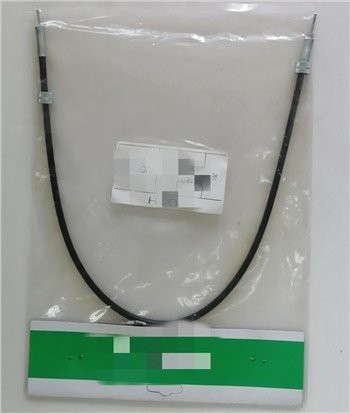
Accelerator cable, clutch cable, brake cable, speedometer cable, choke cable, gear cable and so on.
Our factory
The factory is cover an area 13,000 square meters and engaged nearly 300 employees.
Our service
Provide product information such as specification, material, picture or sample etc,provide accurate quotation, quality control, delivery time and advise minimum order quantity etc.
Yycontrol Cables
Here’s a fun fact – all the ‘yy’ in yy cable stands for is that the insulation and outer sheath material are pvc! Originally manufactured for measuring, controlling, and regulating control equipment in industrial applications, the yy cable is now also used in domestic applications with the rise of home automation systems.
YY cables generally feature a super-durable pvc outer sheath, so it can withstand harsh conditions. However, since yy cables are unshielded, they’re not recommended for applications where electromagnetic interference may be a concern.
YY cables also tend to be sold with low smoke zero halogen (lszh) or low smoke & fire (lsf) sheath options, so that in the event of a fire the level of toxic substances released from the burning cable is reduced.
Cy Control Cables
Similar to yy cables, cy cables are named as such because they feature a copper braided shield and a pvc outer sheath. Normally used in for applications that specifically require a low amount of electromagnetic interference, cy cables are generally supplied in variations for both internal and external use.
Sy Control Cables
As above, sy cables are named as such due to their steel wire braided shield and pvc outer sheath. Similar to cy cables, sy cables are often used in applications where electromagnetic interference is of particular concern.
How to Select Proper Control Cables


Shielding
This term is closely related to electromagnetic interference that may be caused by industrial automation lines and equipment. However, it is not easy to image an industry in which cables are routed far away from equipment, as it increases the length of such cables and generates additional costs. Thus, a shield provides protection against interference and safeguards the signal. Obviously, unshielded cables are still used in certain industries. They are installed on those sites in which no interference occurs or where interference does not affect the quality of data transmitted. The most popular shielding materials include: Aluminium foil, braids of tin plated copper wires or braids of galvanised steel wires. In order to enhance cable protection against interference, a few shields are often used simultaneously. In such cases, not only a cable itself is shielded, but its cores as well.
Cable Core Structure And Material
Control cables most often come with cord-like copper cores (sometimes additionally tin plated), as such a solution ensures considerable conductance. A proper choice of materials also ensures that a core is resistant to mechanical damage. Cables with nickel plated or silver plated cores are also available. This design results in higher strength and resistance to chemical processes.
Insulation Material
Is responsible for a number of properties and cable resistance. High-class insulating materials prevent malfunctions and extend the lifetime of the entire system. The external coat determines such properties as cable flammability, resistance to oil, chemical agents, uv radiation or mechanical damage, i.E. Abrasion, cutting or crushing. Moreover, the insulating material determines the cable flexibility class and makes it possible to manufacture products for mobile applications. The most common insulating materials include: Pvc (polyvinyl chloride), pur (polyurethane), frnc (flame retardant, non corrosive) or lszh (low smoke zero halogen), i.E. A material which does not emit any harmful gases in contact with fire.
Halogen Content
Information regarding the halogen content is important in the context of fire protection. During combustion, halogen cables generate toxic gases, and halogen-free cables only emit slight amounts of non-toxic smoke. Selection of cable characteristics which are appropriate for operational conditions results in minimising any risk of malfunction and extending the lifetime of the entire system.
The Performance of the Control Cable
Insulation Performance
The control cable is mainly made of polyvinyl chloride. The voltage of 1min and 1kv cannot be broken down between the conductors. And between the conductor and the shield, even the voltage of 5mim 3kv cannot break down.
Capacitance
The capacitance of the control cable when working. The average value can reach 52f/km.
Defense
Under the condition of 150khz, the average combined power is greater than 69db/km.
Number Of Cores
The number of cores of the control cable is large, which is mainly used as a cable for electrical equipment to transmit control signals. If the number of cores is large, it is possible to reach 61 cores. Generally, it can be produced according to the requirements of users.
Cross-sectional Area
Most of the current and voltage of the control cable are relatively small, so its cross-section generally does not exceed 10 square meters.
However, due to the different application fields of the control cable, the performance requirements of control cable may be different in some aspects. Therefore, you still need to consider comprehensively according to your actual needs, so as to choose a control cable that suits you.
What is the Difference Between Control Cables and Power Cables
The meanings of control cables and power cables are different
The meaning of power cable: Power cable refers to the cable with thick wire diameter, generally 3 cores or 4 cores, its interphase insulation is thick, and on the outside has metal armor protection.
The meaning of control cable: Yy control cable is a pvc-sheathed and pvc insulated control cable suitable for industrial and mining enterprises, energy and transportation departments, and for control and protection circuits with an ac rated voltage below 450/750 volts.
The precautions for control cables and power cables are different
Overvoltage. Atmospheric overvoltage or internal overvoltage makes the air gap inside the cable insulating medium free under the action of a strong electric field, resulting in insulation degradation or breakdown.
Overload. The overload of the cable makes the core wire of the cable overheat, accelerates the aging of the insulation layer, and causes the cable to fail.
The insulation is damp. Water ingress due to poor sealing or poor installation of the junction box or terminal box, or due to cable quality problems, small holes or cracks in the metal sheath, and the metal sheath being stabbed by foreign objects or corroded and perforated. Moisture of cable insulation causes failure.
Under the eaves. The yy control cable can be used only when it is not directly exposed to sunlight or ultra-high temperature and. It is recommended to use pipeline. Ultraviolet (uv) - do not use cables without uv protection in direct sunlight.
On the outer wall. Avoid direct sunlight on the wall and man-made damage. Heat--control cables are exposed to high temperatures in metal conduit or trunking, and many polymeric materials experience reduced service life at these temperatures.
In pipes (plastic or metal). If in pipes, pay attention to the damage of plastic pipes and the heat conduction of metal pipes. Repair of fiber optic cables is very expensive, requiring at least two terminations at each discontinuity point.
The application of control cable and power cable is different
Application of power cables: The wire and cable products. Used in the power system mainly include overhead bare wires, bus bars (bus bars), power cables, branch cables (replacing part of the bus bars), electromagnetic wires, and electrical equipment wires and cables for power equipment.
Application of control cables: Used in computer systems and information transmission systems, mainly including local telephone cables, radio frequency cables, optical fiber cables, data cables, electromagnetic wires, power communication or other composite cables. Among them, shielded control cables are widely used in power plants and power stations because of their good shielding performance.
Installation and Maintenance Tips
Proper installation and maintenance are crucial for ensuring the longevity and performance of electrical control cables.
Proper handling and storage
Handle cables with care to avoid damage to the insulation and conductors. Store cables in a cool, dry place, away from direct sunlight and corrosive substances.
Correct installation techniques
Follow manufacturer guidelines and industry best practices during installation. Ensure cables are not subjected to excessive tension or bending beyond their specified bend radius.
Regular inspection and testing
Perform regular inspections and testing to identify any signs of wear, damage, or degradation. Address any issues promptly to prevent potential failures and ensure continuous operation.
Documentation and labeling
Maintain accurate documentation and labeling of cable installations. This practice simplifies future maintenance and troubleshooting, ensuring efficient and safe operations.
Tips for Installing the Control Cables
The Conductive Core Of Cables
For the conductive core, you need to know what material the conductive core is made of, how much the core cross-section is, and how the number of small fibers inside the core. From this information, you will be able to consider appropriate construction options to ensure that the transmission efficiency of the cable is not reduced.
The core material and core cross-section will affect the transmission distance. The number of small fibers will increase the softness of the core (increasing the bend radius of the cable) and increase the ability to absorb the vibration caused by the surrounding machinery.
Shield Tape Of Cables
Shield tape helps control power cables to transmit signals better. They are made of thin aluminum foil or tin-plated copper mesh. The material made of aluminum foil is quite solid, so it is necessary to pay attention to the allowable bend radius to avoid breaking the anti-interference layer of the control cable.
Voltage Of Cables
Operating voltage is also a factor you should consider when installing power cables. Normally, cables with a voltage of 300v/500v or 0.6/1kv will be routed to a separate cable tray system from systems with low voltage <100v.
The Installation Environment
Before installing the control cable, you must learn carefully about the technical requirements of the project to have a certain understanding of the operating environment, and the compounds that the power cable must be exposed to every day.
Based on the installation environment, control cables are often classified into many types with features such as anti-interference cables, oil, and chemical-resistant cables, fire-resistant cables, etc.
For example, in the steel manufacturing industry, the power cables selected in the manufacturing plant are often subjected to high temperatures of up to 1000 degrees celsius, oil resistance, and chemical resistance and some areas also require anti-interference features. Good.
The Installation Procedure
In the process of installing control cables, there are two important factors we need to pay attention to the installation position between the power cables and the ambient temperature of the power cables.
Installation Position Between Power Cables
For the installation location between cables, the cause of the difference in amperage is due to the heat generated inside the power cable. At that time, electricity will be lost due to the process of converting electrical energy into heat energy.
If the cables are located next to each other, during power transmission, the temperature between the cables will resonate, causing the total temperature to increase, and reducing the amperage in the cable.
Certifications

Our Factory
Fulida is founded in 2000, throughout the year and continues today, it has more than 20 years professional and productive experience. The factory is cover an area 13,000 square meters and engaged nearly 300 employees. Our product: Accelerator cable, clutch cable, brake cable, speedometer cable, choke cable, gear cable and so on. Fulida starts overseas business since 2009, it wins unanimous trusts with high quality from the customers of europe, america, southeast asia etc.


FAQ
As one of the most professional control cable for machine manufacturers and suppliers in China, we're featured by quality products and good service. Please rest assured to wholesale custom control cable for machine made in China here from our factory.
Transimission cable for Ben Z, Auto Brake Cable for Toyota, Auto Accelerator Cable